Skip to content


E-waste, also known as electronic scrap, is a growing global problem. According to the United Nations Global E-Waste Monitor 2024, around 62 million tons of electronic waste were produced worldwide in 2022 – and companies are also contributing with discarded laptops, PCs, servers, and smartphones. But there is also another way: With the right strategies, your company can not only save costs but also make an active contribution to the environment. Learn how to get the most out of your hardware with sustainable IT economics – for your company and the planet.
The most important in a nutshell
- Around 62 million tons of electronic waste were generated worldwide in 2022 – companies also contribute by disposing of their IT equipment.
- The three most effective strategies: extend the life cycle of devices, continue to distribute unused hardware through remarketing, and properly recycle only defective devices.
- Legally speaking, „reusing before recycling“ applies – and for deleting the data on obsolete devices, your company is solely responsible.
1. Extending life cycles: getting more out of your hardware
A large proportion of electronic waste is generated because devices are disposed of too early. However, many IT components can be used for longer with simple measures:
- Maintenance & upgrades: Regular maintenance and targeted hardware upgrades can extend the lifespan of your devices by years. For example, replace the memory or SSD before replacing entire laptops.
- Refurbishment: Used devices can be professionally refurbished and thus made usable again for internal use or for passing on.
💡 Tip: Check your internal processes. When are devices classified as "obsolete" and are there alternatives to purchasing new ones?
2. Remarketing and resale: give hardware a second chance
IT that is no longer needed is not waste, but a valuable resource. Many devices that are decommissioned in companies have a high value on the secondary market.
- IT remarketing: Sell used hardware to specialized service providers or directly to other companies. This not only generates revenue, but also reduces the environmental impact.
- Donations: Charitable organizations or schools are often grateful recipients of used laptops or PCs.
👉 Advantage: Professional partners often take care of BSI-compliant data erasure so that your company data remains secure.
3. Recycling and zero-waste strategies: recovering raw materials
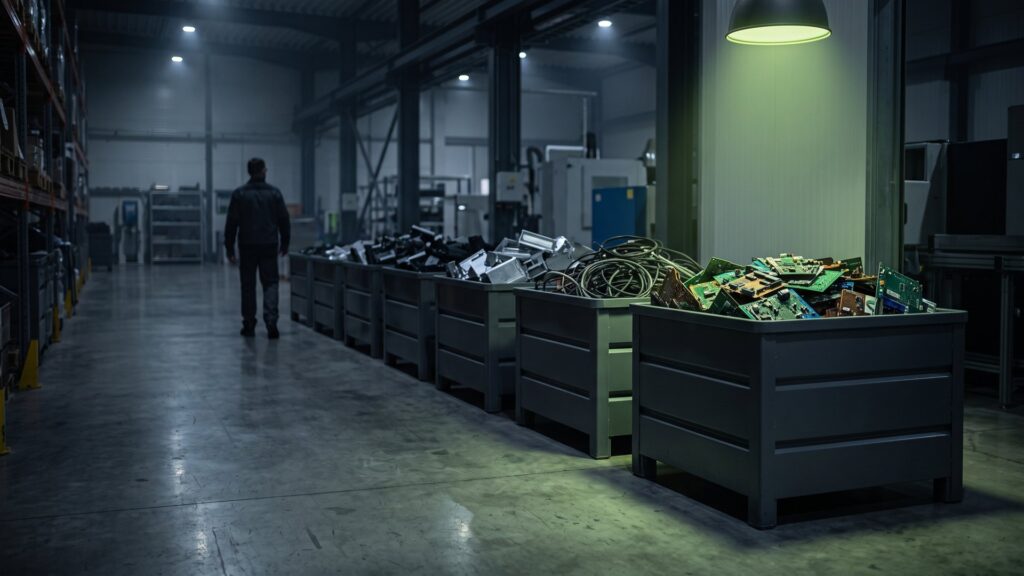
If appliances really can no longer be used, recycling is the best option. Modern technologies make it possible to recover valuable raw materials such as gold, copper and rare earths from old appliances.
- Partnerships with recycling specialists: Work with certified service providers who specialize in the professional disposal and recycling of IT hardware.
- Zero-waste approaches: Develop internal processes to close the waste loop as much as possible.
🔗 Find out more: Discover how BSI-compliant data erasure and certified IT recycling They can be part of your sustainability strategy.
Legal framework: What applies to decommissioned IT
The legislators are also committed to avoiding e-waste. Three points are particularly important for companies:
- Waste hierarchy (§ 6 KrWG): Prevention and reuse take precedence over recycling, recycling over incineration or landfilling.
- Electrical and Electronic Equipment Act (ElektroG): Old devices do not belong in the general waste stream; they must be collected separately. The owner of the devices is responsible for deleting personal data from the devices – that is, your company.
- EU Ecodesign for smartphones and tablets: From June 2025, manufacturers must provide replacement parts and software updates much more frequently.
Anyone who disposes of old devices through a certified waste disposal company and has the disposal of each device documented is on the safe side. Second IT is a waste disposal company in accordance with § 56 KrWG; the valid certificates can be found on our website. Certificates.
What a certified waste management company is and which ElektroG obligations companies specifically have is explained in our article Certified waste management company and ElektroG.
Conclusion: Sustainability starts within the company
Avoiding e-waste is not only good for the environment, but also a competitive advantage. Companies that implement sustainable IT strategies save resources, optimize costs and strengthen their brand reputation. Now is the perfect time to initiate change in your IT.
🌍 Let your IT work for you - sustainably and economically.
More on the topic: Scope-3 emissions: Why your IT hardware is included and Disposing of data carriers in accordance with the GDPR: What really matters in an audit.
Frequently Asked Questions about E-Waste in Companies
What is E-Waste?
E-waste (English for „electronic waste“) is the technical term for electrical waste – that is, obsolete electrical and electronic devices, from smartphones to laptops to servers. These devices contain valuable raw materials such as copper, gold, and rare earths, but also pollutants. Therefore, they must not be thrown into the general waste stream. It is best to avoid creating e-waste in the first place, because devices are used longer or passed on.
How can a company avoid e-waste?
The three most effective levers are: extending the lifespan, passing on no longer needed devices via IT remarketing, and properly recycling only truly defective devices. In addition, procurement criteria such as reparability and spare part availability should be established internally. Also, determine internally when a device is considered „obsolete.“ This will prevent hasty new purchases.
How much does it cost to recycle old IT hardware?
This depends on the type of device, age, condition, and quantity. Well-maintained devices often have residual value that is included in the offer. For defective or very old devices, on the other hand, disposal costs may arise. The quickest way to find out is to send us a list of devices – you will receive a quote within an average of 48 hours.
Avoid electronic waste – with proceeds instead of disposal costs.
Send us your list of devices. We will review what can be reused, delete certified devices, and properly dispose of the rest – with documentation for your ESG reporting.