Skip to content

When companies talk about their carbon footprint, it usually involves heating, fleet, and electricity. IT is included in the electricity consumption in the data center – and that often solves the problem. However, a large part of the footprint from laptops, smartphones, and servers is not generated during operation but during their production. This is exactly what makes IT hardware a topic for Scope 3 and for your sustainability reporting.
The most important in a nutshell
- Scope-3 emissions are indirect emissions in your supply chain – in the case of IT hardware, primarily from manufacturing and disposal.
- The biggest leverage lies in longer use: Every device that gets a second life replaces a new production.
- For CSRD and ESG reports, you need reliable data: quantities, recovery routes, recycling and disposal records.
- Companies that are not themselves required to report data are also increasingly being asked for this information by large clients.
What Scope 1, 2 and 3 mean
The Greenhouse Gas Protocol, the internationally accepted standard for greenhouse gas inventories, divides emissions into three categories:
| Area | What does that include? | Example from IT |
|---|---|---|
| Scope 1 | Direct emissions from own facilities | Backup generator in the data center |
| Scope 2 | Indirect emissions from purchased energy | Power for servers, cooling and workstations |
| Scope 3 | All other indirect emissions in the value chain | Production of new notebooks, transportation, and disposal of old devices |
Within Scope 3 there are 15 categories. For IT hardware, three are particularly relevant:
- Category 1 – purchased goods and services: such as accessories and consumables.
- Category 2 – Capital goods: Notebooks, PCs, servers and network technology that are activated.
- Category 5 – Waste from operations: the disposal of your old equipment.
Why manufacturing is becoming so important
The production of IT devices requires metals, rare raw materials, water and a lot of energy. The Federal Environment Agency has calculated an illustrative example: a new notebook that is 10 times more % energy efficient than the old one would have to be used for over 80 years before its energy consumption is offset. According to the Association of German Water Protection Organizations, up to 20,000 liters of water are used to produce a single PC.
This leads to a simple conclusion: In the case of IT hardware, it is not the operation of the device that is the biggest climate factor, but the purchase of a new device.
The greenest notebook is the one that doesn’t need to be produced again.
CSRD and ESRS: What that means for IT
The EU directive on sustainability reporting (CSRD) and the associated standards (ESRS) require reporting companies to provide information on climate and the circular economy. Two topics are particularly important for IT:
- ESRS E1 – Climate change: Greenhouse gas emissions, also in Scope 3.
- ESRS E5 – Resource use and the circular economy: What you buy, how long you use it and what happens to it afterwards.
With the so-called Omnibus Package, the EU has postponed deadlines and significantly reduced the number of companies that are directly required to report information. You should consult your accounting firm or sustainability advisory firm to find out what the rules currently are for your company.
Regardless of this, large companies are increasingly asking their suppliers for sustainability data. Those who can provide reliable figures about their IT are at an advantage – even without their own reporting obligations.
Five levers for a better IT balance sheet
1. Use it for longer
Each additional year of use spreads the workload over more time. Repairs and upgrades, such as more memory or a larger SSD, extend the lifespan.
2. Reuse instead of recycling
When devices have reached the end of their life cycle, reusing them with another user is the next best option. Recycling recovers raw materials, but the energy required for their production is lost.
3. Buying refurbished items
Not every workplace needs the latest model. Professionally prepared equipment can be an alternative for training rooms, storage facilities, pool equipment or second workstations.
4. Optimize transportation and packaging
Direct trips instead of detours, reusable items instead of disposable ones: The logistics of decommissioning also count.
5. Measuring and documenting
No report without data. Keep track of how many devices you sample, how many are reused, and how many are recycled.
What data you need for your report
If you are disposing of your old devices through a service provider, you should request this information:
- Number and type of devices provided, ideally with serial numbers
- Share of reused devices and components
- Share of recycled devices and materials
- Recycling and disposal certificates under the Circular Economy Act
- Information on transport logistics
- An environmental balance that represents the effect of reuse
An indication of the methodology: How saved emissions from reuse can be presented in your report is governed by the respective standards. As a rule, avoided emissions are shown separately from your own balance sheet and are not simply deducted. Consult your sustainability advisor regarding the presentation.
In practical terms, this means that before the first pick-up, you and your waste management partner should agree on the key metrics you need at the end of the year. This way, the data can be collected during the ongoing process, rather than having to painstakingly reconstruct them later.
This is how Second IT supports your sustainability reporting
- Inventory analysis: We assess your devices based on their condition and market value and identify what can be reused.
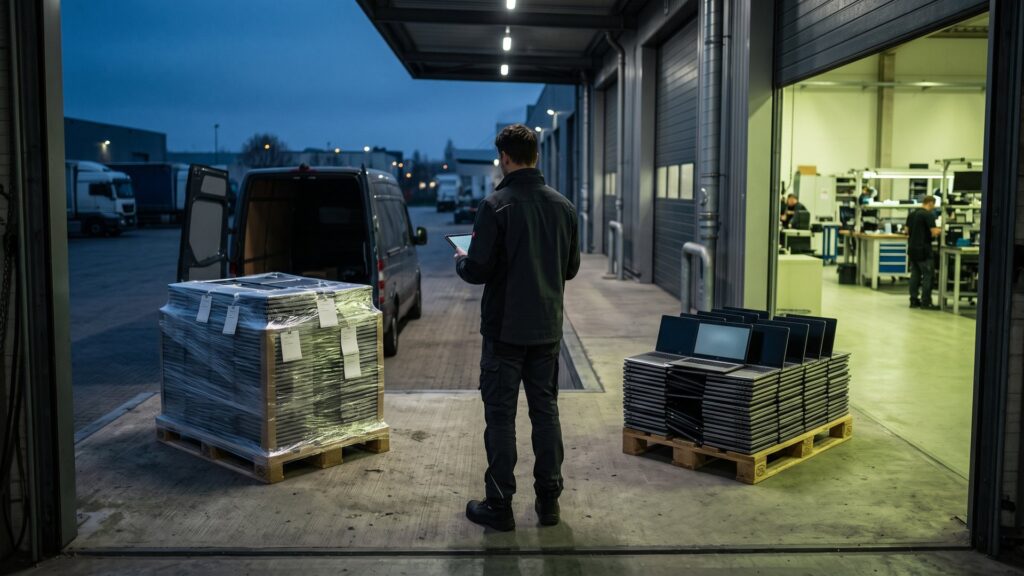
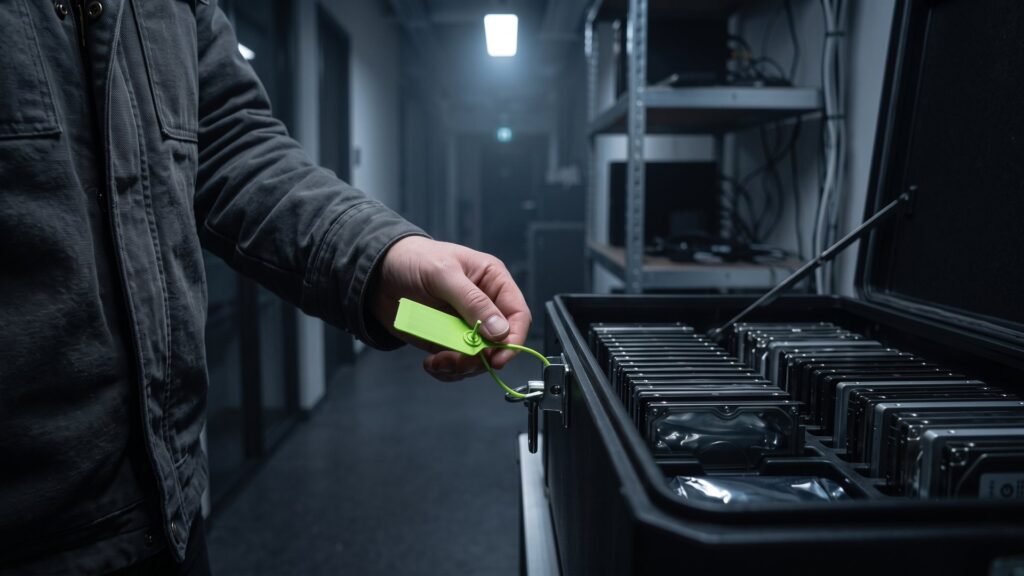
- Secure pickup: With our own security logistics. Our shipping is CO₂-neutral thanks to DHL GoGreen; in logistics, we rely on reusable packaging.
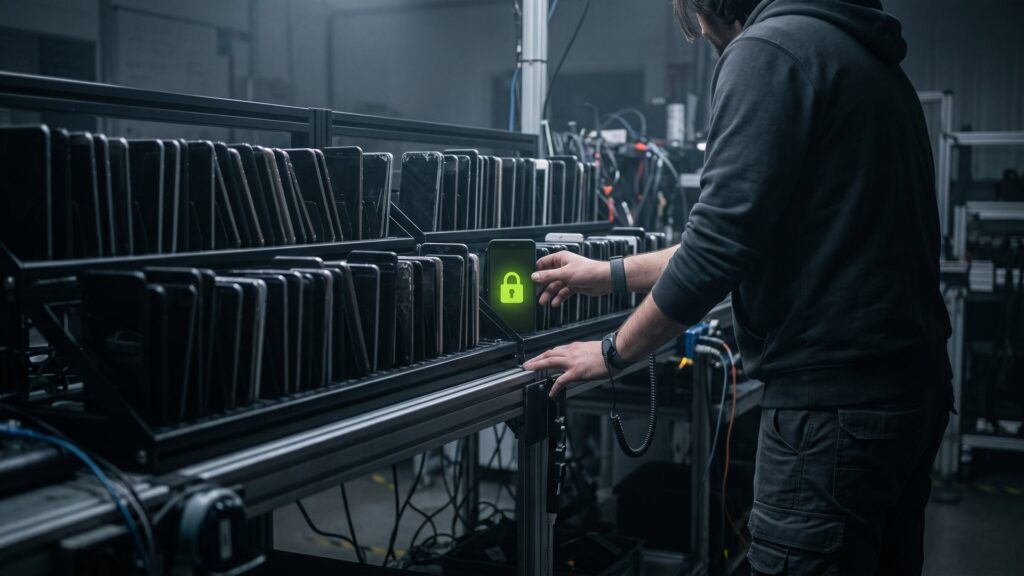
- Certified deletion: With Blancco and with green electricity, among other things from our own solar system with around 100 kWp.
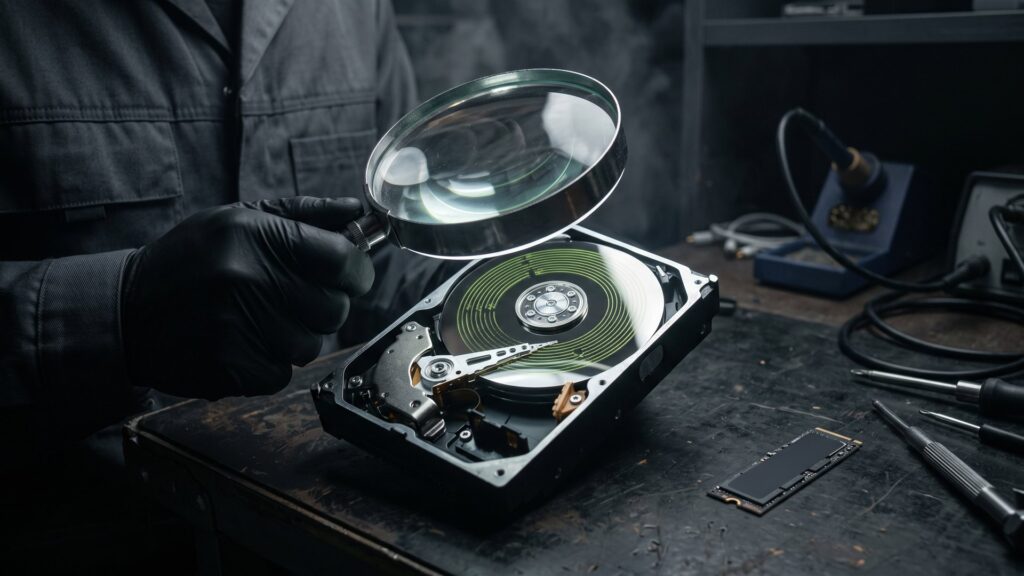
- Reuse before recycling: Reprocessing at our headquarters. We have already reprocessed over 180,000 devices.
- Professional recycling: Anything that cannot be reused is disposed of by us as a certified waste disposal company.
- Evidence: Recycling and disposal certificates for your CSR and ESG reporting as well as an annual, individual environmental balance sheet.
Our environmental management is certified according to ISO 14001. More information can be found on the pages. Sustainability and Waste disposal. Our contribution offers a self-test for decision-makers How green is your IT really?.
Typical errors in IT sustainability reporting
- Just look at the electricity: Anyone who evaluates IT solely based on energy consumption overlooks the large proportion that comes from manufacturing.
- Disposal as a black hole: Old appliances are being discarded, but no one knows how many have been reused and how many have been recycled.
- Playing off data protection against sustainability: Out of concern for data, everything is shredded. With certified deletion, both security and reuse are possible.
- Requesting proof too late: If you only ask for figures in the annual report, you will often only find invoices. Determine the required data when you commission the work.
The IT cycle in six stages
A sustainable hardware life cycle looks like this: procurement with an eye toward durability, long use with repairs and upgrades, secure disposal, certified deletion, reuse by a second-user, and only at the end does recycling occur. Every station you extend improves the balance sheet. And every station you document provides numbers for your report.
Frequently asked questions about Scope 3 and IT hardware
Does IT hardware belong to Scope 3?
Yes. Emissions from the production of purchased hardware count as Scope 3, usually in the category of capital goods. The disposal of your old equipment falls into the category of operational waste. The electricity consumption in operation, on the other hand, belongs to Scope 2. In the case of IT equipment, the proportion from production is often particularly high.
Does selling used IT improve my carbon footprint?
Reusing avoids the need for new production and therefore emissions for the next user. As described in your report, the respective standards govern this. Most often, avoided emissions are reported separately. Directly, it has an impact that your old devices are not documented as waste but as reused items.
What evidence do I need for my ESG reporting?
Information on decommissioned equipment, details on reuse and recycling, and proof of disposal are helpful. A sustainability report from your recycling partner can also provide additional information. It is important that the data is traceable and verifiable. Request these documents when you commission the work.
Does my company have to report under the CSRD?
This depends on size, legal form, and the current state of EU and national regulations. The omnibus package has pushed back deadlines and narrowed the scope of application. Clarify your obligations with your accountant. Even if you do not have your own obligations, customers can still require sustainability data from you.
What is the difference between reuse and recycling?
When reusing a device, after being deleted and prepared, it is still used; the manufacturing costs remain the same. When recycling, the device is disassembled, and raw materials such as metals are recovered. Recycling is better than disposal, but reusing saves significantly more resources. Therefore, the principle applies: Reuse before recycling.
Less electrical waste, better figures, clean evidence.
Send us your list of devices. We’ll show you what can be reused and create a quote within an average of 48 hours.