Skip to content


A business closure is rarely a calm project. Whether a branch closes, a company is liquidated or insolvency proceedings are underway: time is short, contacts change, and in the end there is an office full of IT. That is exactly when the most expensive mistakes happen – servers are sold with data on them, notebooks disappear, data carriers end up in a skip. This guide shows how to remarket IT hardware during a business closure securely, with documentation and the highest possible proceeds.
The most important in a nutshell
- GDPR and retention obligations continue to apply even in a wind-down, liquidation or insolvency. Data must first be backed up, then securely erased.
- IT hardware often has real market value. Selling it as a lot to a certified remarketer usually brings in more than individual sales without documentation.
- Leased and rented devices are not part of the liquidation assets. They must be recorded separately.
- An inventory list with serial numbers is the basis for the offer, erasure and final documentation.
Three situations, one problem
| Situation | Who decides | Typical challenge |
|---|---|---|
| Site closure (branch, subsidiary, warehouse) | Management, head of IT | Devices at a remote location, little staff on site |
| Liquidation of a company | Liquidators | Assets must be turned into cash, and records must continue to be retained |
| Insolvency | Insolvency administrator | Fast remarketing with clear documentation for creditors |
However different the cases are, the task is the same: the hardware should leave the company – without data, with documentation and at a fair price.
What still applies legally
Data protection does not end with the business
Servers, notebooks and smartphones hold customer, personnel and supplier data. The GDPR makes no exception for companies that close down. The controller – depending on the case, the management, the liquidators or the insolvency administrator – must continue to ensure that this data is protected (Art. 5 and Art. 32 GDPR). If devices are sold with data on them, this is a data protection violation that can have consequences even after the company has been dissolved.
Retention obligations continue
At the same time, you must not simply delete everything. Commercial and tax law require records to be retained: books and annual financial statements for ten years, accounting vouchers for eight years since 2025, commercial and business letters for six years (§ 257 HGB, § 147 AO). For a GmbH, the books and records are placed in the custody of a shareholder or a third party for ten years after the liquidation is completed (§ 74(2) GmbHG). Electronic records must remain readable and analyzable throughout this period.
This leads to the most important sequence of the entire wind-down: archive first, then erase. This article does not replace legal or tax advice.
Rule of thumb: in a business closure there are two kinds of data – data you must retain and data you must securely erase. For data carriers in a skip there is no third category.
What IT hardware is worth in a wind-down
Liquidation and insolvency are about converting assets into cash. The liquidators of a GmbH have exactly this task (§ 70 GmbHG), as does the insolvency administrator. IT hardware is often underestimated in this process. Current notebooks, monitors, servers and networking equipment have a market value that drops quickly if the devices sit in empty offices for months.
Two approaches are common:
- Individual sale: Devices are offered individually or in small lots. This sometimes brings in a little more per device, but costs a lot of time, and data protection often remains unresolved.
- Sale as a lot to a certified remarketer: One offer for the entire inventory, with pickup, erasure and documentation from a single source. This is usually faster and much cleaner for the documentation.
At Second IT, the offer is based on a Inventory analysis with database-supported market valuation. Based on your list, you receive it in 48 hours on average. How companies turn disposal costs into proceeds this way is also described in our article IT remarketing instead of expensive disposal.
Leasing, rental, ownership: who owns what?
Not everything in the office belongs to the company. Leased notebooks, rented copiers and devices from service providers are not part of the liquidation assets. They must go back to their owners – ideally with an erasure report, because the data on them remains your responsibility. What to do at the end of a leasing contract is described in our article on expiring leasing contracts.
Therefore, create a list with three columns early on: owned, leased/rented, unclear. Everything in the "unclear" column is clarified before remarketing.
Servers, storage and network first
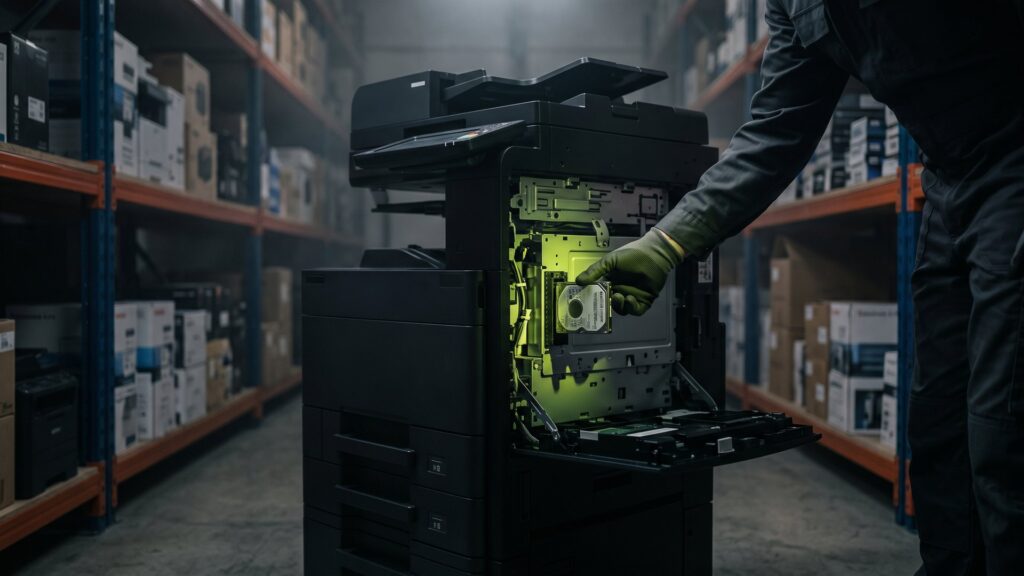
Most data is not on notebooks but in the server room. There, data carriers sit in places that are easily overlooked during clearing out: RAID drives, boot SSDs on the mainboard, SD cards as boot media, backup tapes, configurations in switches and firewalls. Our guide on how to sell used serversshows exactly where.
Data carriers that cannot be erased securely – defective drives, tapes, damaged media – are destroyed in-house at Second IT: Destruction according to DIN 66399, certified for security level H-5, with serial number tracking and certificate of destruction.
Process of IT remarketing during a business closure
- Appoint a responsible person: One person holds all the strings together, even as the team shrinks.
- Data backup: Archive data subject to retention obligations and document the archiving.
- Create inventory: Device type, manufacturer, model, serial number, condition, location and ownership.
- Request an offer: For the entire inventory, including devices without market value.
- Pick-up: Ideally as pickup with our own secure logistics – direct trip without intermediate storage, GPS-monitored, sealed and insured. Europe-wide, including for multiple sites.
- Registration and erasure: Registration by serial number, certified erasure with Blancco or destruction in accordance with DIN 66399.
- Recycling: Refurbishment and remarketing, spare parts recovery or recycling.
- Final documentation: Erasure and destruction certificates, audit report, disposal records and invoicing.
IT timeline for a site closure
The earlier IT is included in the planning, the smoother the wind-down goes. This sequence has proven its worth:
| When | Task |
|---|---|
| As soon as the closure is confirmed | Appoint a responsible person, clarify retention obligations, start the inventory |
| Eight to six weeks before | Complete the inventory, clarify ownership, obtain an offer for remarketing |
| Six to four weeks before | Archive data, register leasing returns, set pickup dates |
| Last week of operation | Dismantle workstations, count devices and hand them over sealed |
| After pickup | Check certificates against the inventory list, inspect rooms for forgotten data carriers |
In liquidation and insolvency, the time frame is often tighter. This makes it all the more important that the inventory list is ready early – it is the basis for every offer.
If only part of the company is moving, our checklist on the topic of planning an IT move.
Devices without market value
Old printers, defective monitors and obsolete telephone systems often no longer have any resale value. They still must not go out with bulky waste. Electrical and electronic equipment is subject to the ElektroG and must be disposed of properly. Second IT is a certified waste management company under § 56 KrWG (German Circular Economy Act) and also takes care of this part – with disposal with documentation for every device.
What matters especially in liquidation and insolvency
Liquidators and insolvency administrators must be able to make their decisions comprehensible to shareholders and creditors respectively. For IT remarketing, this means:
- Traceable valuation: A written offer based on a complete inventory list documents why a price is reasonable.
- Clear accounting: Proceeds for marketable devices and costs for disposal and destruction should be shown separately.
- Speed: Vacant rooms cost rent. Picking up the entire inventory in one appointment shortens the clearance.
- Liability protection: Erasure and destruction records per serial number protect against later allegations that data was passed on uncontrolled.
A service provider that covers buyback, logistics, erasure, destruction and disposal itself reduces the number of parties involved. This makes the documentation simpler and responsibility clearer.
Checklist for management, liquidators and insolvency administrators
- Is it clear who is responsible under data protection law and who may place orders?
- Has data subject to retention obligations been archived and is its custody arranged?
- Is there a complete inventory list with ownership details?
- Have leased and rented devices been recorded separately?
- Have all sites and home offices been taken into account?
- Is there a data processing agreement with the remarketer?
- Do you receive an erasure or destruction record for every device with a data carrier?
- Who checks the certificates against the inventory list at the end?
Typical mistakes
- Employees are allowed to "take" notebooks home – without erasure and without a receipt.
- Servers are sold completely to a dealer, hard drives included.
- The server room is cleared last, when hardly anyone still knows what is in there.
- Archive data is deleted before retention has been clarified.
- Leased devices are accidentally sold along with the rest.
More on the topic: Choosing an ITAD provider: 12 questions to avoid common pitfalls and Clean up the server room, fill the cash register.
Frequently asked questions about IT during a business closure
What happens to IT during a business closure?
First, data that must be retained is backed up. Then the hardware is inventoried, separated by ownership and handed over to a remarketer. The remarketer erases the data carriers in a certified process or destroys them and remarkets the devices. At the end, you have documentation for every device.
May liquidators or insolvency administrators sell IT hardware?
Yes, realizing the assets is part of their duties. They remain responsible for protecting personal data in the process. That is why data carriers should be certifiably erased or destroyed before the sale. Clarify the details of your case with your legal counsel.
May I delete all data when a company is dissolved?
No, not immediately. Commercial and tax law prescribe retention periods of six to ten years. This data must be archived and remain readable. Only after that are the data carriers of the retired devices securely erased. Clarify the deadlines with your tax advisor.
Does Second IT also pick up at multiple sites?
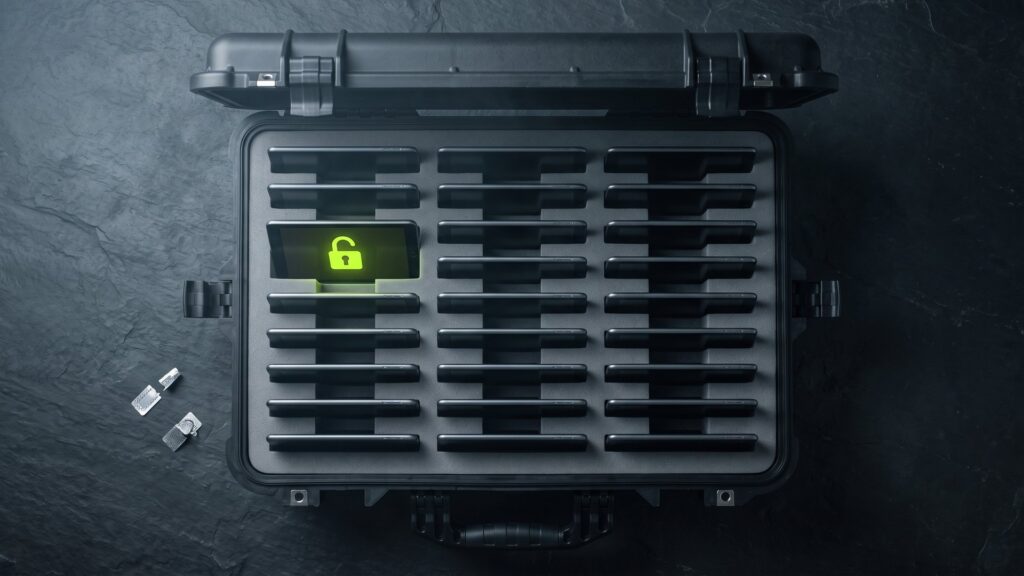
Yes. Second IT offers Europe-wide pickup with its own secure logistics and uniform security standards. For smaller sites, lockable rolling carts and sealed PELI Cases are also available. The basis is a list per site with devices and contact persons.
Closing a site or winding up a business? We clear out the IT – securely, documented and with proceeds.
Send us your inventory list. You will receive a quote within an average of 48 hours.