
 Skip to content

GPS-Tracking im Transport
In brief
GPS tracking in transport is the satellite-based location tracking of vehicles or shipments in real time, in which the position data is continuously transmitted to a system and stored. This makes it possible to trace where a load is and whether it is taking the planned route. When transporting decommissioned IT, it is one building block of the unbroken chain of evidence up to data erasure.
What GPS tracking achieves – and what it does not
A GPS receiver in the vehicle determines its position via satellite signals and sends it via mobile network to a platform. There, route, dwell times and deviations can be analyzed.
| GPS tracking shows | GPS tracking does not show |
|---|---|
| where the vehicle was and when | whether a container was opened |
| whether there were unplanned stops | which devices are in the load |
| when it arrived at the destination | whether data was erased |
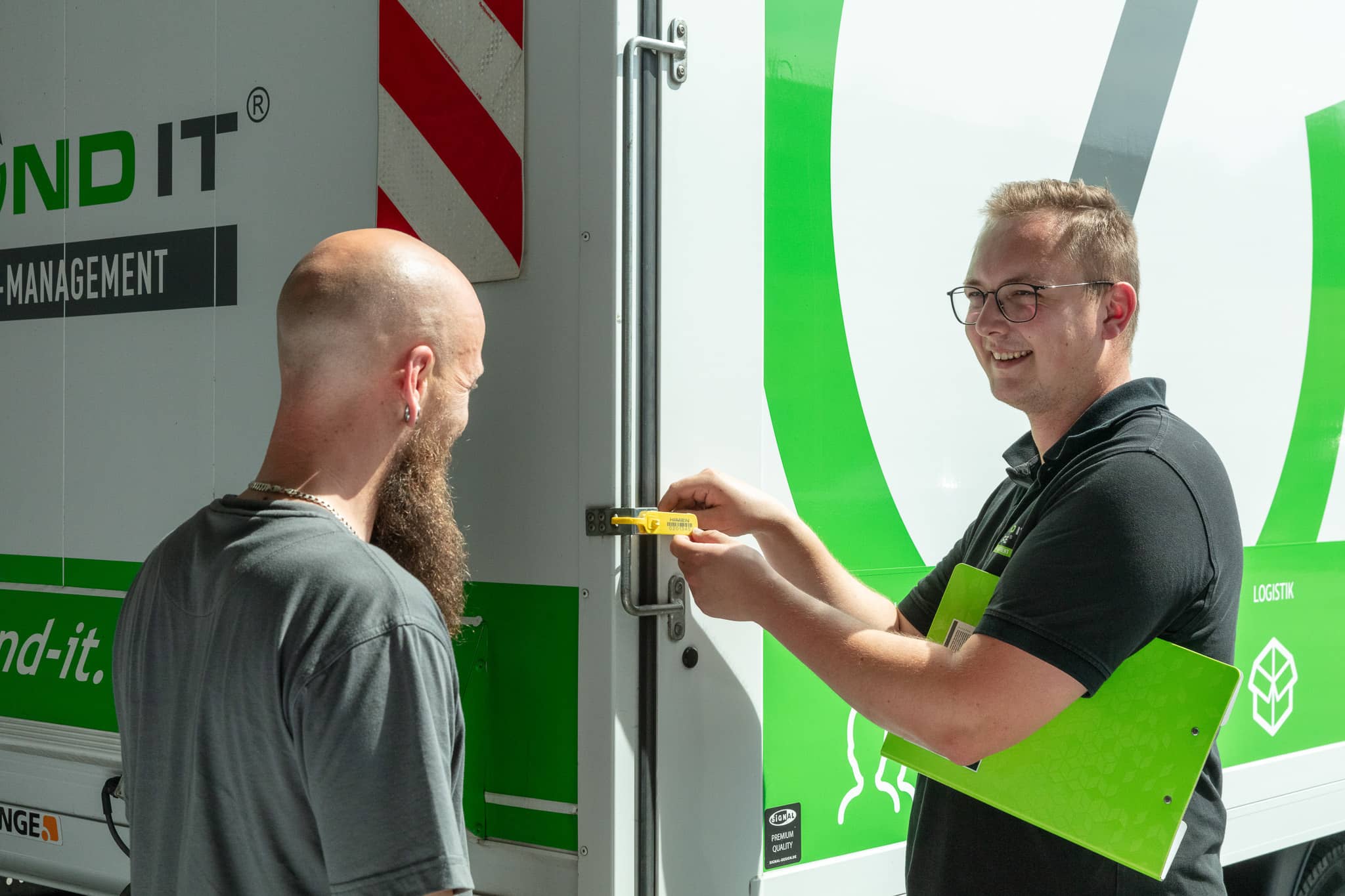
That is why GPS tracking only works in combination with other measures: security seals indicate tampering, a Direct transport avoids intermediate stops, and the comparison of serial numbers at goods receipt proves completeness. If data of drivers is collected in the process, the rules of employee data protection must also be observed.
GPS tracking at Second IT
With the Secure logistics by Second IT every vehicle can be located in real time so that irregularities can be responded to quickly. According to the general terms and conditions, secure logistics at pickup includes GPS tracking of the vehicle and sealing of all data carriers. The trips are direct trips without intermediate storage, and the transport is insured. How a pickup works in a business closure is shown by our guide Business closure.
Frequently asked questions about GPS tracking in transport
Is GPS tracking sufficient as proof of a secure transport?
Not on its own. It shows the vehicle's route but not the condition of the load. Together with seals, acceptance record and comparison at goods receipt, a robust proof results.
Can I track the transport of my devices myself?
That depends on the service provider. At Second IT, customers track the status of their devices via the customer portal with live tracking.
Is GPS tracking of vehicles permitted under data protection law?
Generally yes, if it serves a legitimate purpose such as transport security and employees are informed. The design in the individual case should be coordinated with data protection advisors.
How does GPS tracking work in transport?
A GPS receiver in the vehicle determines its position via satellite signals and sends it via mobile network to a platform. There, route, dwell times and deviations can be analyzed. The position data is continuously transmitted and stored.
What does GPS tracking achieve on a direct trip?
The direct trip avoids intermediate stops. GPS tracking makes visible whether the vehicle takes the planned route and whether there were unplanned stops. It does not show whether a container was opened. For that, seals are additionally needed.
Related terms
GPS-monitored, sealed, direct – pickup with our own logistics.
Send us your device list. You will receive your offer in 48 hours on average.