
 Skip to content

Reverse Logistics (Rücklogistik)
Logistics usually thinks in one direction: from the manufacturer to the customer. For IT hardware, the way back is just as important – after replacement, at offboarding or at the end of a lease. This way back is called reverse logistics. Here you will learn what it involves and what is different for devices with data.
In brief
Reverse logistics (return logistics) covers all processes by which goods flow from the user back to the retailer, manufacturer or service provider – for inspection, repair, reuse, recovery or disposal. This includes collection, transport, goods receipt and sorting. For IT hardware, the protection of the stored data is added, which is why return logistics is often organized here as secure logistics.
What belongs to return logistics?
The term comes from logistics and the circular economy. It describes the reverse flow of goods: products do not arrive at the customer new but go back used, defective or surplus. In retail, this mostly concerns returns. In IT, it concerns decommissioned devices from offices, home offices, branches or data centers.
| Step | Content for IT hardware |
|---|---|
| Recording | Device list with serial numbers, locations and quantities |
| Collection and packaging | Bundle devices, protect them, seal data carriers |
| Transport | Collection on site or shipping, for sensitive data as Secure transport |
| Goods receipt | Counting, matching against the list, checking for storage media (Incoming goods inspection) |
| Sorting | Reuse, repair, spare part recovery or recycling |
| Proof | Erasure and destruction certificates, disposal records |
Typical occasions in IT
- Hardware replacement: A company replaces hundreds of notebooks at once.
- Offboarding: Employees working from home return their devices – often spread across many addresses.
- End of lease or rental: Devices go back to the lessor or provider.
- Data center dismantling: Servers, storage and network technology are dismantled in large quantities.
- Buyback programs: In a Buyback a partner buys back used devices.
What matters in IT return logistics
For consumer goods, cost and speed matter most. For IT hardware, data security stands alongside them on equal terms: as long as a device has not been erased, every transport is a risk. Good return logistics therefore combines protected containers, traceable handovers and a count that records every device individually. For individual devices from home offices, different solutions are needed than for a pallet from headquarters. Reusable Reusable packaging reduce waste and costs in the process.
Which questions you should ask a service provider about logistics is shown by the checklist Choosing an ITAD provider.
Return logistics at Second IT
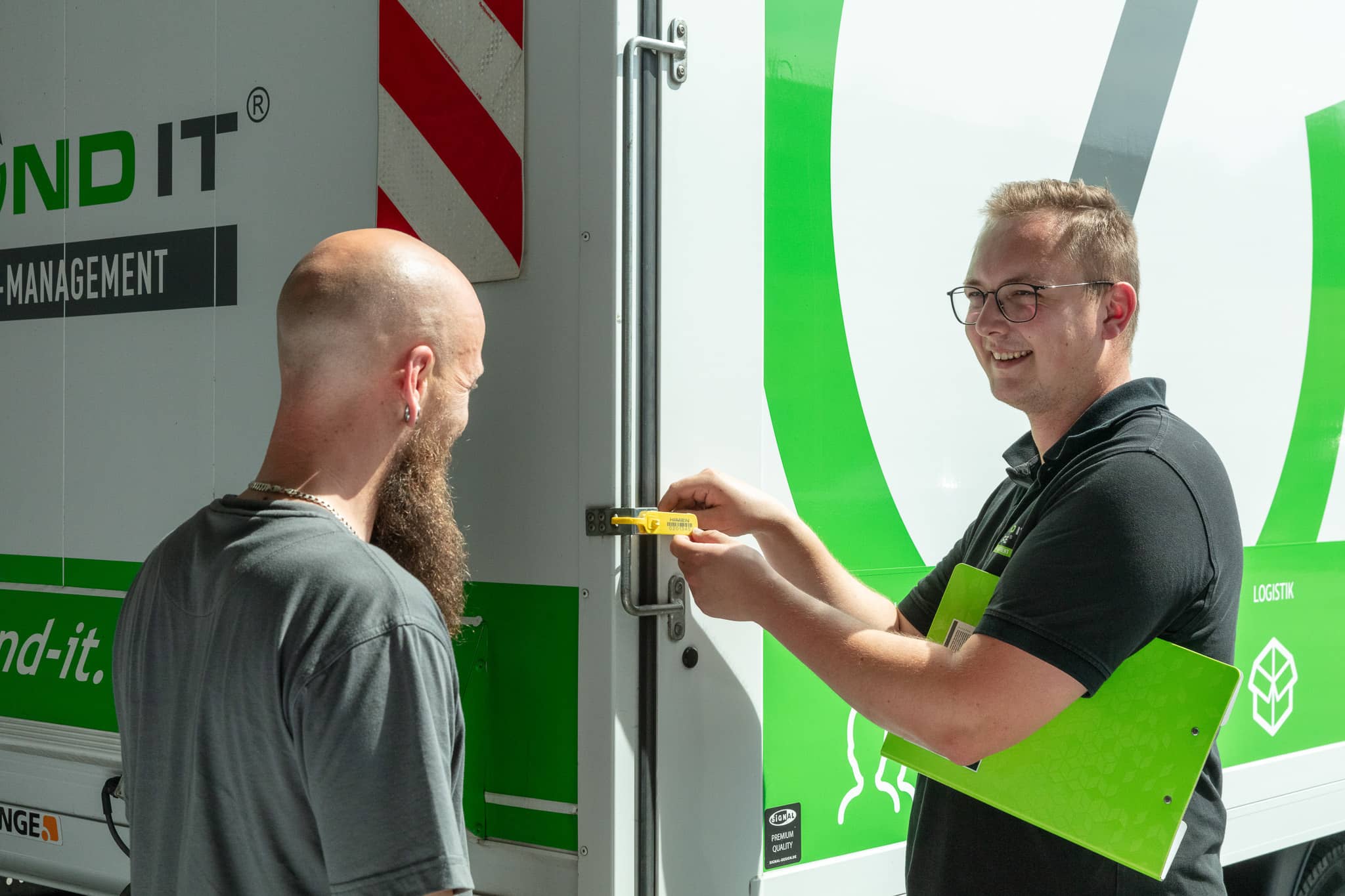
Second IT organizes the return of IT hardware with its own secure logistics: direct trips without intermediate storage, GPS monitoring, tamper-proof sealing and insured transport, Europe-wide. For smaller quantities there is the PELI Case with two seals according to ISO 17712, the roll cage for up to 750 kg and single-item shipping via DHL return. At goods receipt, every device is recorded by serial number; you can see the status live in the customer portal. More on Second IT logistics.
Frequently asked questions about reverse logistics
What is the difference between reverse logistics and returns logistics?
Returns logistics usually refers to the return of purchased goods by customers in retail. Reverse logistics is the broader term and covers all return flows, including decommissioned devices, returned leased equipment, empties or packaging.
How do I get devices back from the home office?
Prepared shipping solutions for individual devices are common, such as return labels or robust, sealable containers. What matters is that every device is recorded by serial number and matched at the recipient.
Why is return logistics important for the circular economy?
Only devices that come back in an orderly way can be tested, refurbished and reused. Without return logistics, functional devices end up in storage or in the trash.
Why does return logistics for IT hardware need special security?
As long as a device has not been erased, every transport is a risk for the stored data. Good return logistics therefore combines protected containers, traceable handovers and a count that records every device individually. This is then often called secure logistics.
How can waste and costs in return logistics be reduced?
Reusable returnable packaging reduces waste and costs. For individual devices from home offices, different solutions are needed than for a pallet from headquarters. In both cases, it is important that every device is recorded individually.
Related terms
Return of your IT – secure, counted and traceable.
Send us your device list. You will receive your offer in 48 hours on average.