
 Skip to content

ISO 17712
In brief
ISO 17712 is an international standard for mechanical seals used to close freight containers and other transport containers. It divides seals into three classes according to their resistance and requires that every attempt to open leaves visible traces. When transporting decommissioned IT, a seal under ISO 17712 shows that a container was not opened unnoticed between pickup and arrival.
The three seal classes
| Grade | Designation | Property |
|---|---|---|
| I | Indicative (indicating) | Light, can be opened by hand or with a simple tool; only indicates whether it was opened |
| S | Security (security) | Medium strength, opening requires a tool |
| H | High Security (high security) | Very robust, such as bolt or cable seals, opening only with heavy tools |
The 2013 version requires not only mechanical tests but also tamper evidence: an attempt to open or bypass the seal must remain recognizable. High-security seals must be tested in accredited laboratories. Each seal carries a unique number, which is documented at closing and opening.
ISO 17712 when transporting data carriers
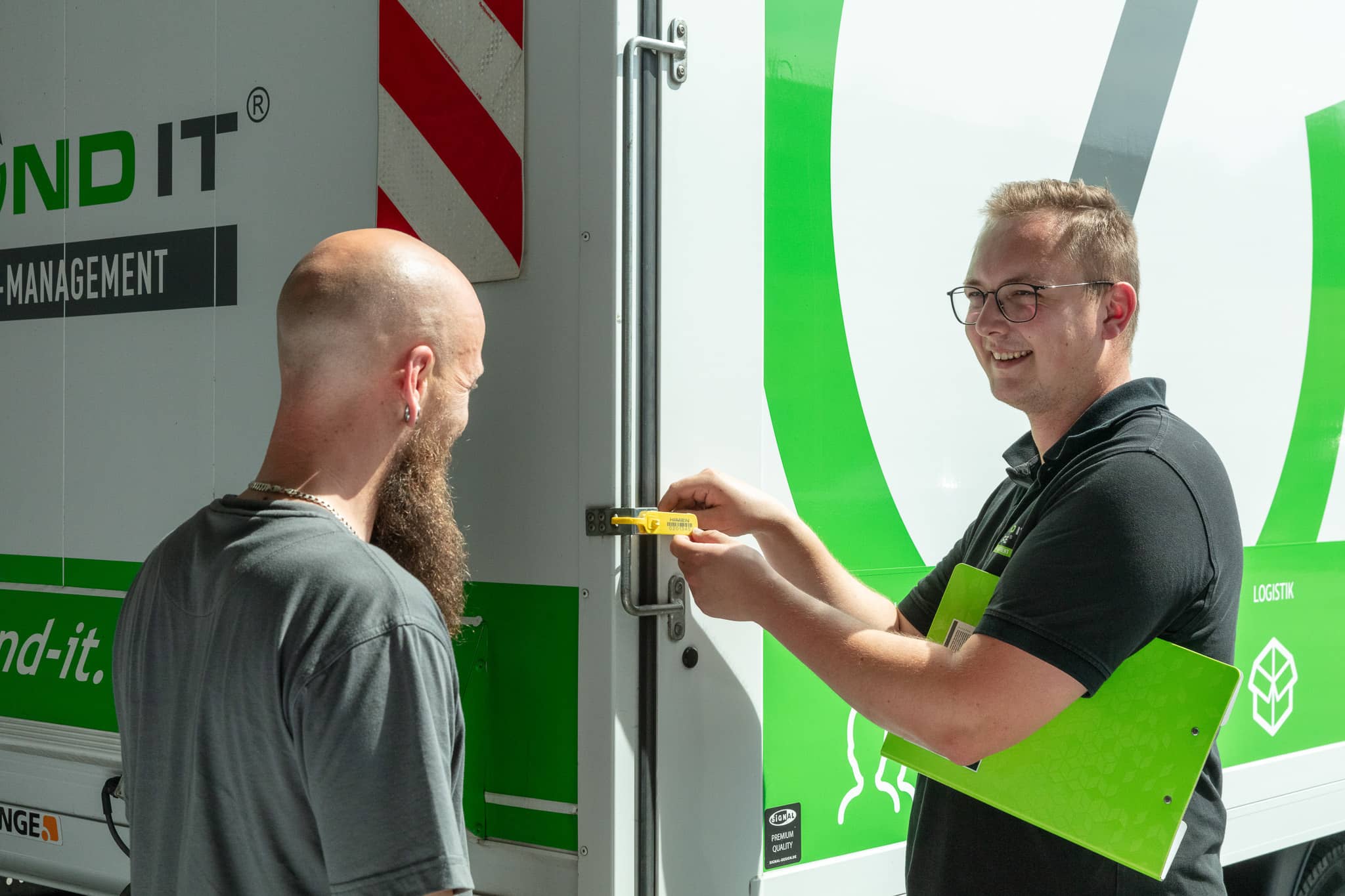
A seal does not prevent theft but makes every access visible. Together with documented seal numbers, it becomes a link in the Chain of custody. More on the function in the entry Security seal. For self-shipping, Second IT supplies the PELI Case, a high-security case with two high-security seals under ISO 17712:2013. For pickup with its own secure logistics, the data carriers are sealed and only unsealed in-house. More on Secure logistics by Second IT.
Frequently asked questions about ISO 17712
What does "H" mean for a seal under ISO 17712?
"H" stands for High Security. Such seals are very resistant and can only be removed with heavy tools. They are used, for example, in international container traffic.
Why do seals have a number?
The unique number is noted when closing and compared when opening. This makes it possible to prove that the same, intact seal arrived at the destination.
Does a seal protect against theft?
Only to a limited extent. Its main task is to make every attempt to open visible. Locked vehicles, direct trips and GPS tracking also help against theft.
Which requirements must a seal meet under ISO 17712?
The 2013 version requires mechanical tests and tamper evidence. An attempt to open or bypass the seal must remain recognizable. High-security seals must be tested in accredited laboratories.
What distinguishes seals of classes I, S and H?
Class I only indicates whether it was opened and is easy to open. Class S has medium strength, a tool is needed to open it. Class H is very robust, for example as a bolt or cable seal, and can only be opened with heavy tools.
Related terms
Transport data carriers sealed – with our own secure logistics.
Send us your device list. You will receive your offer in 48 hours on average.