Skip to content

For three or four years, the leasing notebooks have been running smoothly. Then the letter arrives: contract ends in 90 days. Things get hectic from now on – collecting the devices, deleting the data, checking the condition, scheduling appointments. And eventually, someone asks the question that often comes too late: return the device or rather, use it yourself? This article will help you prepare for the leasing return in peace and choose the best option.
The most important in a nutshell
- In the case of IT leasing, there are usually three options at the end of the contract: return the equipment, extend the lease, or take over the equipment and resell it.
- The responsibility for the data on the devices remains with you – even if the leasing provider offers a deletion option.
- Missing devices, damage, and missing accessories are often re-calculated when returning items.
- Plan at least three months before the end of the contract. Then you can still compare offers for replacement and purchase.
The three options at the end of the lease
The options you have are outlined in your leasing agreement. In practice, most cases end up involving one of these variants:
| Option | Advantages | Risks and effort |
|---|---|---|
| Return to the leasing provider | Clear conclusion, no residual value question | Collecting costs, deadlines, possible recalculations for damages or missing equipment |
| Extension | No device change, lower rates possible | Older technology, increasing failure rate, value of devices continues to decline |
| Acquisition and resale | Full control over data and workflow; revenue flows to you | The buyout amount must be worth it; the sale must be organized |
Only figures can answer the question of which variant is more economically advantageous: the purchase price on the one hand, the more realistic market value of the equipment, and the savings in subsequent calculations on the other.
The data issue: Your responsibility does not end at the charging station
Many companies assume that the leasing provider takes care of the data. That may be true – but the responsibility under the GDPR remains with you as the responsible party. If customer data appears on a returned laptop, your company is liable.
Therefore, please clarify before returning:
- Does the leasing provider offer a certified deletion? By what procedure?
- Receive an erasure certificate per device with a serial number?
- Is there a contract for order processing that covers the deletion?
- How are the devices transported and where are they stored in between?
If one of these questions remains unanswered, it is safer to have the data carriers themselves certified deleted before handover. How this works, you can read under Certified data erasure.
Note: The device belongs to the leasing provider. The data belongs to you – down to the last sector.
The most common cost traps when returning
Missing equipment
One laptop has disappeared with an employee removed; another was internally scrapped after a defect. If a device is missing upon return, it is usually accounted for. Early reconciliation between the leasing list and actual inventory prevents surprises.
Damage and wear
Scratches, defective buttons, damage to the display, or swollen batteries: Anything beyond normal wear and tear can be accounted for. Check how your contract defines „normal wear and tear“.
Missing accessories
Power supplies, docking stations, and pens: Accessories are often also listed on the back of the product.
Deadlines
Anyone who misses the return date may still be paying leasing installments. Be sure to note the termination and return deadlines in advance.
When it makes sense to acquire and resell
A replacement with subsequent sale may be worthwhile if several of these points apply:
- The devices are in good condition and still in demand, such as business laptops of the higher class.
- The buyout price is below the market price that could be achieved.
- You want to be able to fully control and document the data deletion process yourself.
- There are devices with damage for which high lump-sum fees would be due upon return.
- Employees are interested in purchasing their previous device.
In this case, consider two numbers: the buyout offer from your leasing provider and a purchase offer from a specialized remarketer. At Second IT, you receive a quote based on your device list in an average of 48 hours. The basis is a database-based market assessment. More information here. Consulting and purchasing.
Employee sales as an additional option
Many employees would like to continue using their familiar laptop privately. An organized employee sale after the replacement can therefore be beneficial – for motivation and for the balance sheet. Important: Here too, the data must be previously deleted in a certified manner, and the device must be removed from all company systems. Second IT offers employee sales as part of the purchase.
The 90-day schedule for returning the leased vehicle
- 90 days in advance – Compare the existing status: Compare the leasing list with the actual inventory. Where are the devices located, who is using them, and which ones are missing?
- 75 days in advance – evaluating options: Request a buyout offer, request a purchase offer, estimate the costs of returning the item.
- 60 days in advance – make a decision: Return, extension or takeover. For mixed forms, specify which devices go where.
- 45 days in advance – Provide successor devices: Roll out new devices, migrate data.
- 30 days in advance – collect old equipment: With accessories, accounts deactivated, and locks like „Where is?“ or MDM connections resolved.
- Before the handover – delete data: Certified and with proof of serial number.
- Handover – documentation: Transfer protocol with serial numbers, condition and signature.
How Second IT supports you at the end of the lease
Second IT purchases used corporate IT, certifies and markets the devices further. Around the end of the leasing period, this is especially helpful in two situations:
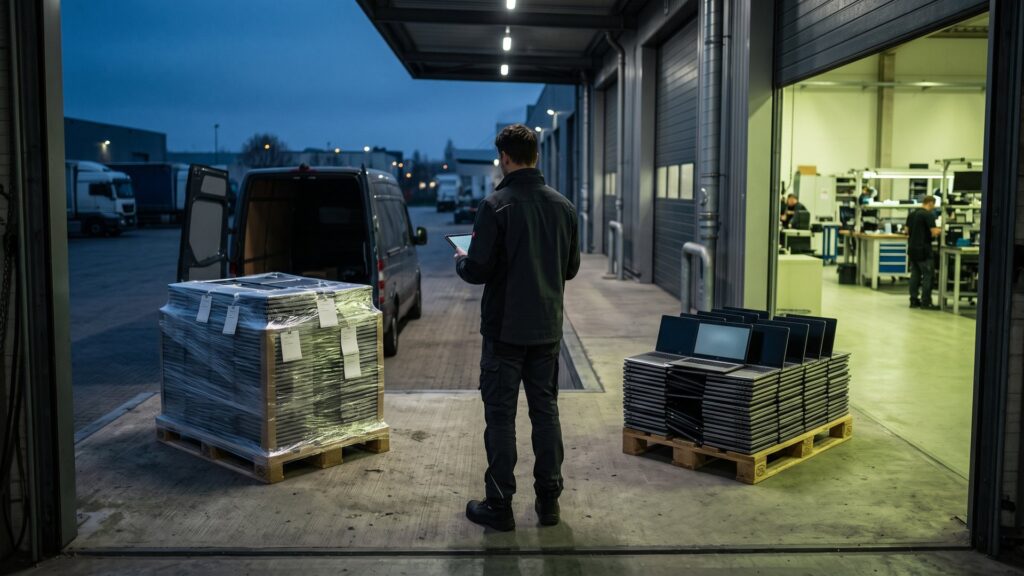
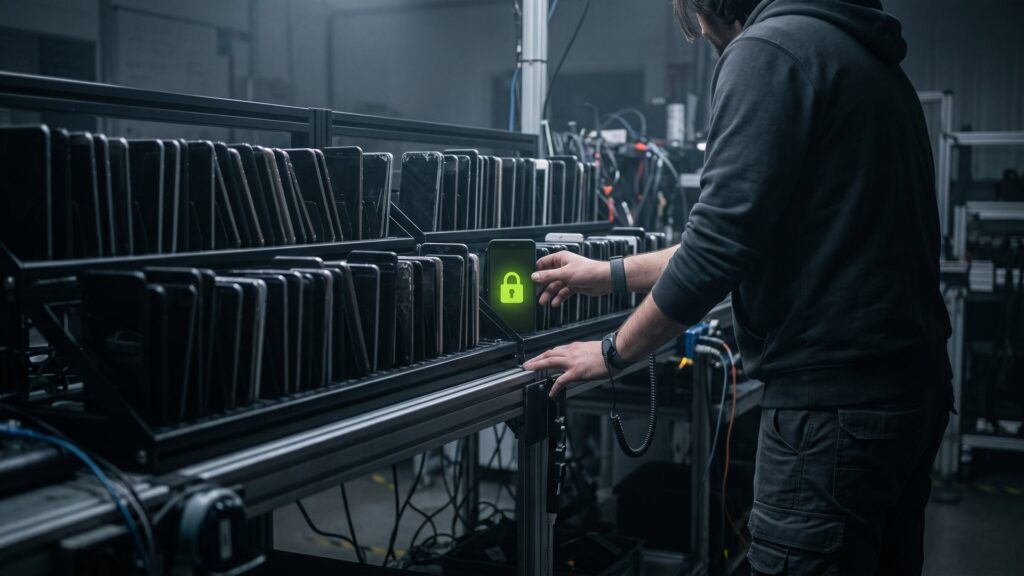
- You take over the devices: We pick up the devices with our own security logistics, wipe them with Blancco, purchase them at market-oriented prices, and provide you with a digitally signed erasure certificate for each device. On request, employee sales or cash-back options are also available.
- They want to know the value before the decision is made: We evaluate your inventory so that you can compare replacement and return on a reliable basis.
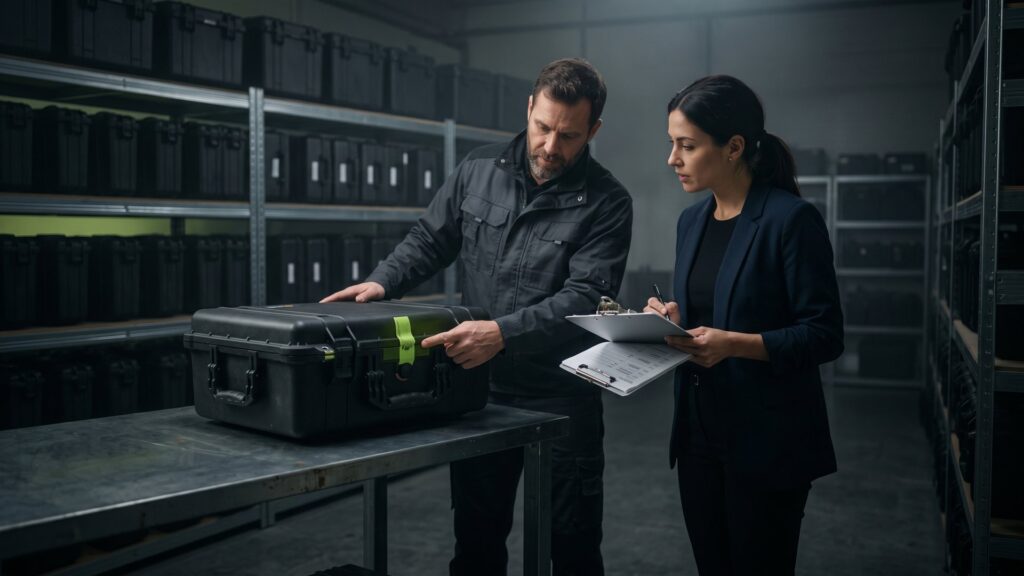
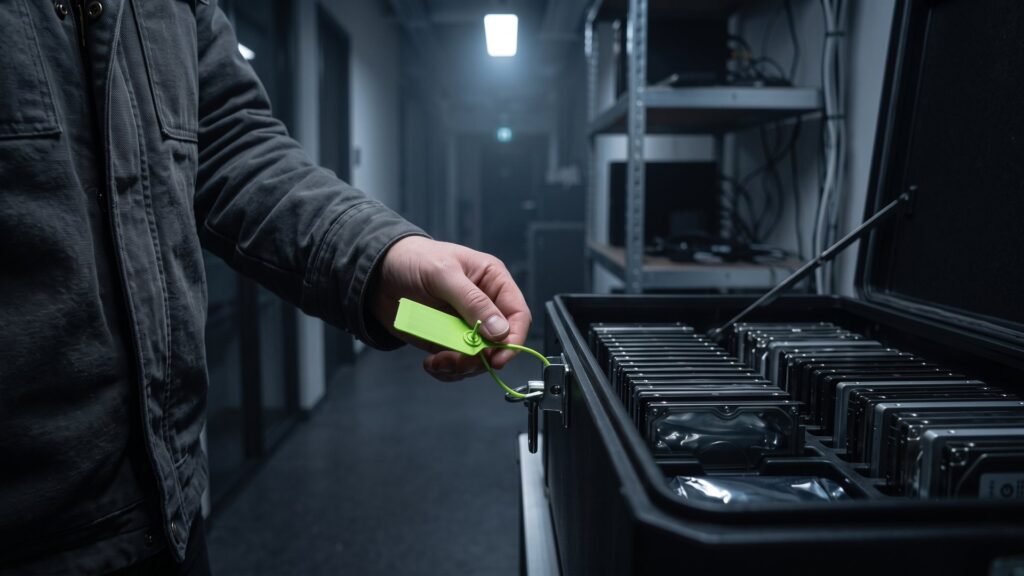
The pickup takes place as a direct trip without intermediate storage, GPS-tracked, insured and documented. More information Security logistics. You can also read about what you should consider when evaluating used laptops in the post. Notebook purchase and monitor sales.
This is how you compare return and replacement
Whether a buyout is worthwhile can be checked by simply comparing the figures for your portfolio:
| Return to the leasing provider | Acquisition and resale |
|---|---|
| Internal effort for collecting, testing and packaging | Remuneration amount according to the leasing provider's offer |
| Expected recalculations for damage and wear | Minus purchase price according to the remarketer's offer |
| Expected costs for missing equipment and accessories | Internal effort for handover to the remarketer |
| Costs for a private deletion, if necessary | Deletion and proof are usually included when purchasing |
| Total return | Total acquisition |
If the buyout price is lower, the economic benefits of the buyout are considerable. Often, a combination of methods is also worthwhile: replacing well-maintained equipment and selling it, returning severely damaged equipment – provided your contract allows it.
Frequently asked questions about returning a leased vehicle
Do I have to delete the leased laptops myself before returning them?
It depends on your contract. Legally speaking, you remain responsible for the data under the GDPR even if the leasing provider offers a deletion option. Check whether you receive a deletion certificate per device and whether a contract for data processing exists. If not, a self-certified deletion before transfer is the safer choice.
What is the cost if equipment is missing during return?
Missing devices are usually calculated according to the terms of your leasing agreement. The amount depends on the contract and the value of the device. Therefore, it is worth making an early comparison between the leasing list and the actual inventory. This way, you have time to search for missing devices or find a solution with the leasing provider.
Is it worth it to retire leased equipment and sell it yourself?
It pays off if the achievable market price is above the replacement value or if you avoid high recalculations for damages. Another advantage is full control over data deletion. For this, request a replacement offer and a purchase offer and compare them. At Second IT, you receive a quote within an average of 48 hours.
How early should I start planning?
Plan at least three months before the end of the contract. During this time, you can review the inventory, obtain quotes, roll out replacement equipment, and clean up the old equipment. Anyone who starts only four weeks in advance has little room for comparison. Also, note the termination deadlines of your contract.
What do I do with leased equipment that is severely damaged?
First, check how your contract handles damages and what flat rates apply. Sometimes it is cheaper to replace damaged devices and have them repaired or recycled than to pay high damage fees. A remarketer can assess whether a repair is worth it. In any case, the data must be deleted in a verifiable manner before being passed on.
Lease expiration in sight? Let us check the value of your devices.
Send us your list of devices. You will receive a purchase offer within an average of 48 hours – as a basis for your decision.