Skip to content
The expensive myth of IT disposal
When it comes to disused IT hardware, many companies immediately think of high disposal and recycling costs. But that doesn't have to be the case! In fact, modern approaches to IT recycling not only offer a cost-efficient alternative, but also potential for sustainability and even new sources of income. Did you know that in Germany alone, millions of unused appliances gather dust in storage every year, even though they still contain valuable resources?
It's time to take a look at the smarter and more sustainable alternatives - and thus fully exploit the potential of your old IT.
The most important in a nutshell
- IT disposal does not have to be a cost trap: With IT remarketing, marketable devices become revenue instead of disposal costs.
- Certified data deletion with a deletion log per device ensures the resale is secure; defective data carriers are destroyed.
- Anything that is no longer usable is recycled into IT hardware – the raw materials are recovered, with proof.
- Well-thought-out lifecycle management extends the lifespan and reduces costs from the very beginning.
1. IT-Remarketing: Aus alt mach Gold
What is IT remarketing?
IT remarketing refers to the process of refurbishing used hardware and bringing it back onto the market. Companies can not only pass on their old devices in a sensible way, but also earn cash.
Advantages:
- Cost savings: Devices that are sold often refinance new investments.
- Sustainability: Used IT continues to be used instead of being disposed of.
- Marketability: Laptops, servers and smartphones are still in demand even after 2–3 years – and often much longer.
Example: A medium-sized company in Munich decided to retire 500 laptops after the end of the leasing period and sell them to a remarketing partner. The result: an income of over 50,000 euros and a CO₂ savings through extended lifecycles.
2. Zertifizierte Datenlöschung: Sicherheit ohne Kompromisse
Why is data erasure important?
Many companies hesitate to sell IT equipment for fear of data privacy violations. However, modern tools and certified service providers enable a demonstrably secure and reliable process. BSI-compliant data erasure.
The most important methods:
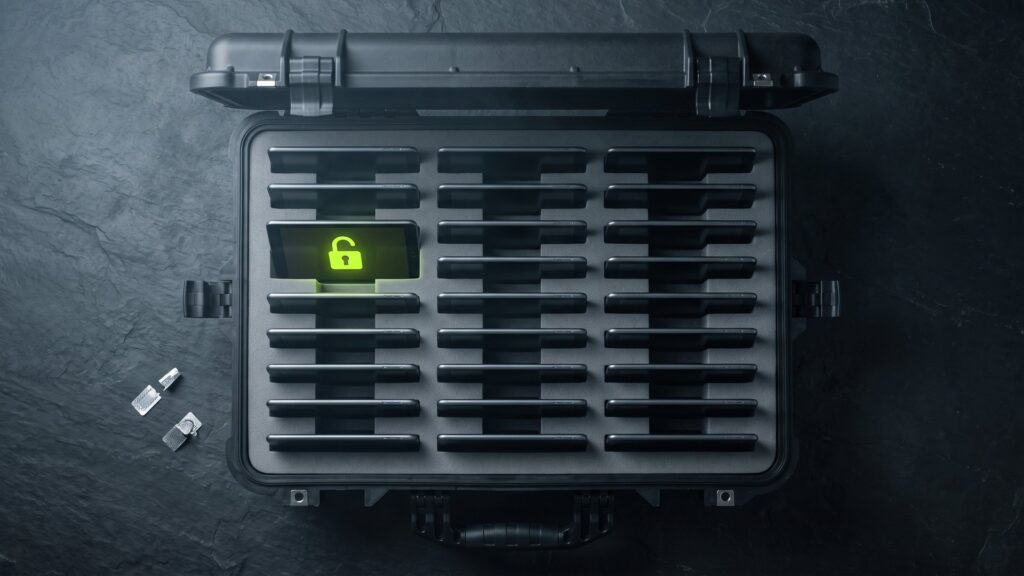
- Software-based deletion: Certified programs like Blancco completely overwrite all data and check the result; with SSDs they additionally use the manufacturer’s erase commands. A deletion log is created for each device.
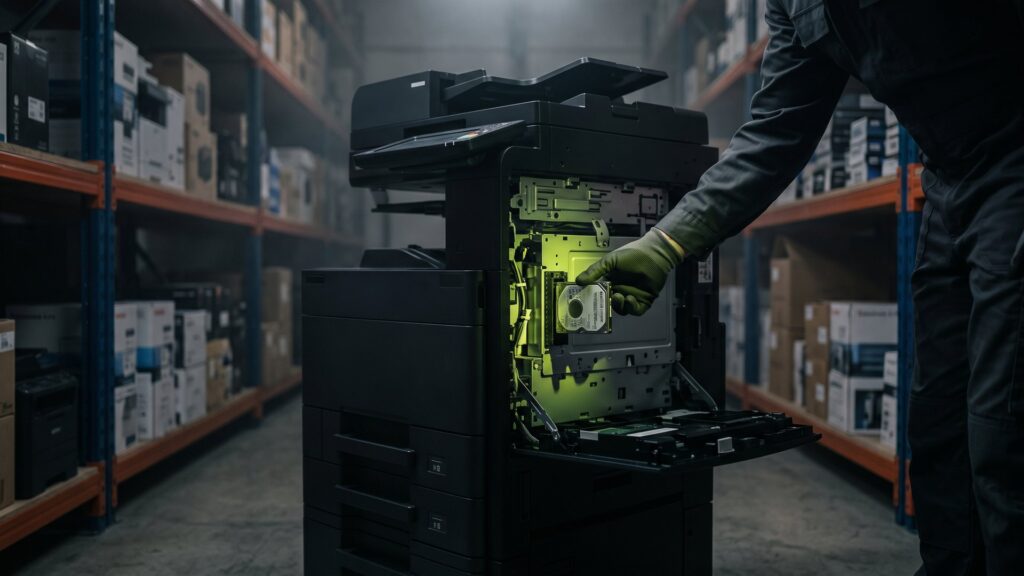
- Physical destruction: Hard drives are mechanically destroyed when reuse is not possible – according to DIN 66399, at Second IT in-house in security level H-5 (Data carrier destruction).
A partner who offers these services also often takes care of the entire logistics - from collection to documentation.
3. Recycling: Wenn Geräte am Ende ihres Lebens sind
Even appliances that are no longer functional often have a residual value. Valuable raw materials such as copper, gold and rare earths can be recycled and reused.
Innovative approaches:
- Urban Mining: Old hardware is seen as a source of raw materials.
- Automated recycling centers: Machines sort materials faster and more efficiently.
Recycling not only reduces electronic waste, but also minimizes dependence on newly mined resources. This saves energy and protects the environment.
4. Lifecycle-Management: Prävention statt Reparatur
The best costs are not incurred in the first place. Companies that rely on well thought-out IT lifecycle management extend the service life of their devices right from the start.
Best Practices:
- Regular maintenance: Software updates and hardware upgrades prevent premature failures.
- Refurbishing: Older appliances are refurbished and reused internally.
- Planning: Predictive management allows device fleets to be optimally utilized.
5. Entsorgen, recyceln oder verkaufen? Die Wege im Vergleich
The paths differ significantly in terms of costs, data security, and sustainability:
| Gone | Costs or revenue | Data security | Sustainability |
|---|---|---|---|
| Returns in the electrical retail sector | Free, but intended for private households | No deletion with proof | Recycling |
| Classical IT disposal | Usually costs per quantity | Deletion remains your task | Recycling, no reuse |
| IT utilization through remarketing | Revenue for marketable devices | Certified deletion, certificate per device | Reuse before recycling |
A common misconception: Electrical retailers like Media Markt are required by the ElektroG to take back old devices free of charge – but this obligation only applies to private households. In any case, your company remains responsible for deleting the data.
Second IT connects all steps: IT hardware purchase at market-oriented prices, certified deletion, and – for everything that is no longer marketable – IT disposal and IT recycling As a waste disposal company in accordance with § 56 KrWG. We have already safely disposed of around 200,000 devices.
Besonders viel Hardware auf einmal fällt bei einer Betriebsauflösung oder Standortschließung an – dazu gibt es einen eigenen Leitfaden.
Conclusion: Your old IT is more valuable than you think
Instead of disposing of old devices at great expense, companies can achieve sustainable and economic benefits with modern approaches such as remarketing, certified data erasure and recycling. At the same time, they make an important contribution to reducing electronic waste.
Act now! Start with an audit of your IT assets and see how you can benefit from the new approach to IT recovery. For more information on secure and efficient IT recovery strategies, see here.
More on the topic: Choosing an ITAD provider: 12 questions to avoid common pitfalls and Disposing of data carriers in accordance with the GDPR: What really matters in an audit.
Frequently asked questions about IT utilization
What is IT utilization?
IT recovery encompasses all ways of making well-used IT hardware useful again, rather than disposing of it. These include IT remarketing (re-selling), refurbishment (reconditioning), the procurement of spare parts, and finally IT recycling of raw materials. A prerequisite is certified data destruction. The goal is to obtain as much value and as many resources as possible.
What does the disposal of old IT hardware cost?
It depends on quantity, device type and condition. Pure disposal usually costs money, while marketable devices generate revenue through IT remarketing. Often, the revenue can fully or partially offset the costs for collection and deletion. You will receive a concrete quote with a list of devices within an average of 48 hours.
What is the difference between IT recycling and IT remarketing?
With IT remarketing, the device is reused as a whole: it is deleted, prepared, and sold. With IT recycling, the device is disassembled, and only the raw materials are recovered. Remarketing is the better choice ecologically and economically. Recycling is the right way to go for devices that are no longer usable.
Can we donate old company PCs to the recycling center or to the electronics store?
Municipal collection points and retailers primarily accept old devices from private households. For commercial old devices, manufacturers must create their own return options, or they must commission a certified waste disposal company. In any case, you must first delete the data yourself or have it deleted. With an IT waste management partner, you can do both in one step.
End expensive disposal – start with your IT recycling.
Determine the price online or send us your list of devices. You will receive a quote for pickup, certified data destruction, purchase, and IT hardware recycling within an average of 48 hours.